Showing posts with label Wildlife watching. Show all posts

Monday, July 27, 2015

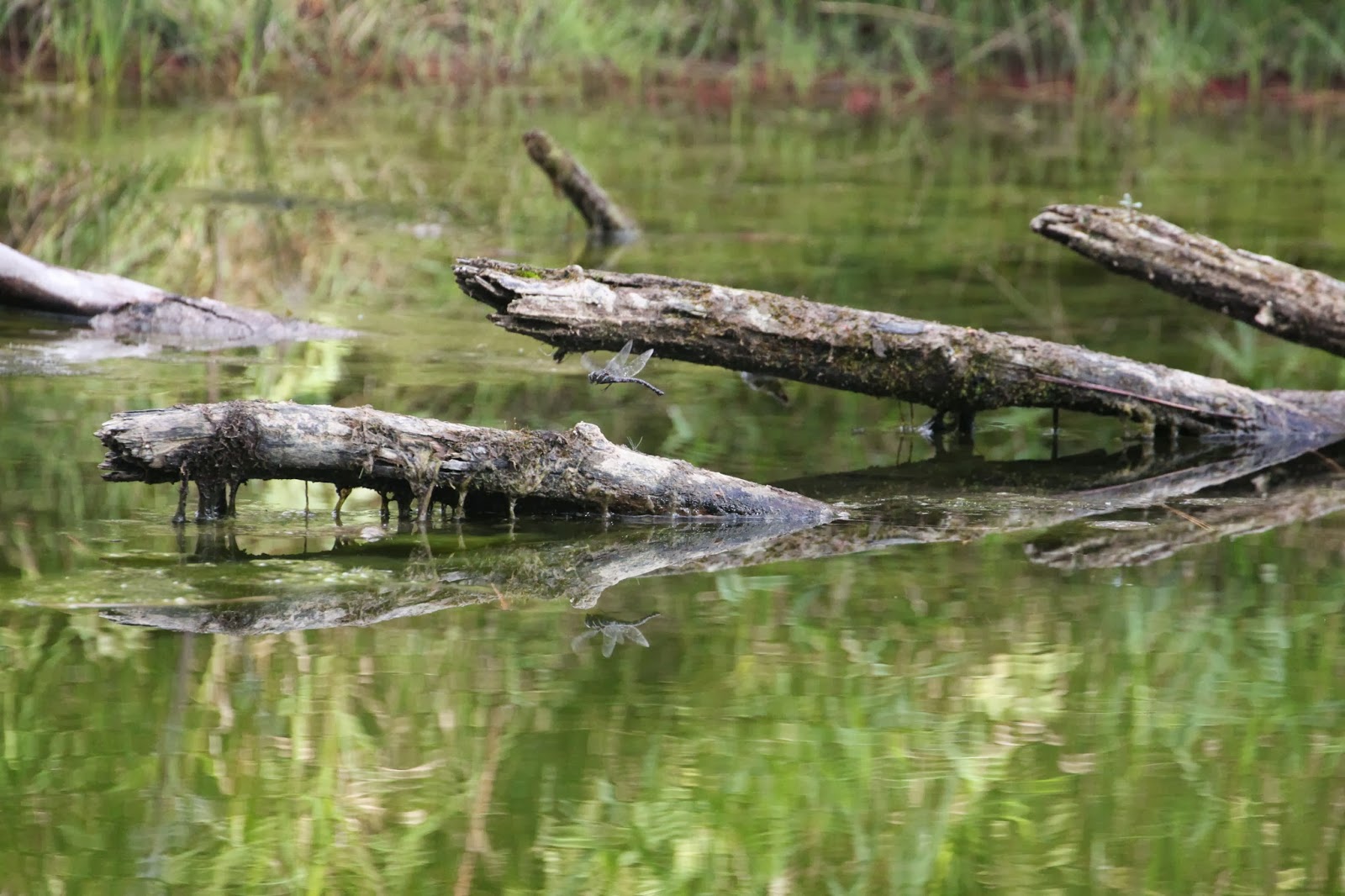
Birders - 10 Reasons You Should Also Dragonfly Watch


  1. Use the same equipment -  Yep, close-focus binoculars and a camera (probably a good point & shoot zoom) are basically all you need. Yes, you can net these animals, but in most cases it is not necessary. Sheryl Chacon website has a good overview of equipment et al.
  2. Similar habitats as for birding - Dragonflies require water habitats for breeding, but many can be found far from water outside of reproduction. That includes upland, desert, grassland and even urban/people places. You can start a yard list even without a created wetland (dragonflies in our yard eat bugs attracted to our flowers) suggested by the National Wildlife Federation.
  3. Best time for dragonfly watching is mid-morning through dusk - Birding definitely falls off during this time, fill the gap with dragonflies. My field trips (kind of go/no-go decision) target conditions of ~60 F (minimum temperature as defined by this paper by T. Sformo and P. Doak) and sunny as necessary for dragonfly flight activity. Midday anywhere USA fits the bill for those minimums. C.L. Goforth has a blog outlining weather and odonate behavior. 
  4. Many dragonfly populations are at their peak in the summer - Birding slows in the summer, while dragonfly activity peaks. Dragonfly action starts late spring into summer/fall for the temperate areas of the U.S. Areas of the south can have substantial activity year round because of warmer seasonal temperatures.  Texas Parks and Wildlife (authors Mark Klym and Mike Quinn) has a comprehensive guide (pdf) for download.
  5. Numerous individuals to identify - The journal Ecology (56:302–317) has a paper by Arthur C. Benke and Susan S. Benke (1975), Comparative Dynamics and Life Histories of Coexisting Dragonfly Populations (abstract here). The authors measured an average of about 1000 dragonfly larvae/square meter in a 1 hectare farm pond. 
  6. Colors, shapes and behaviors mimic bird diversity - Excellent field guides/references exist for dragonflies. The comprehensive field guide by Dennis Paulson (2012), Dragonflies and Damselflies of the West outlines the 348 species of the American West. He also has a companion guide for the eastern U.S. Another national field guide is from Sidney W. Dunkle (2000), Dragonflies Through Binoculars. If you live in the south check out Dragonflies and Damselflies of Georgia and the Southeast (Giff Beaton 2007) or Dragonflies and Damselflies of Texas and South-Central United States (John C. Abbott, 2005).  
  7. Be 1st to discover the dragonfly community of your favorite birding patch - As a citizen-scientist, contribute dragonfly records to Odonata Central that assist in detailing “the distribution, biogeography, biodiversity, and identification of Odonata (dragonflies and damselflies) world-wide”.
  8. Appreciate falcon and flycatcher skill in catching dragonflies - You might be surprised to find out that even Northern Cardinals eat dragonflies (The Birders Bug Book by Gilbert Waldbauer, 1998).
  9. About 50 dragonfly species migrate - Can be a spectacle along coasts or even at a hawk watch, e.g. Hawk Ridge at Duluth (Kurt Mead, 2009, Dragonflies of the North Woods).
  10. Symbol of clean water...they eat mosquitos :-)Earth Times has a short overview of dragonfly species as clean water indicators. 

Eight-spotted Skimmer


Monday, April 6, 2015

Candy Lichen...Harder to find than Easter Eggs

Candy Lichen (Icmadophila ericetorum) is considered common in Montana (McCune et al 2014) on rotting wood or soil of low to mid-elevation sites. However, finding/photographing this species (at Lolo Creek Campground if you would like to find it too!) is a first for me. Colors and form (mint and pink, what a combination) are distinct...so it should not be hard to miss or misidentify. Size, about 2.5"" in diameter, may be a factor. But that is the beauty of all doing, one never gets it "all" without putting in time (lots usually :-)
Candy Lichen
In fact, finding this plant was Plan B. Originally stopped here to find Fox Sparrow (Passerella iliaca); that did not happen. Temperature of 41 F and snow may have been the cause of this result. Video below gives some context:


Sunday, December 7, 2014

Use a Camera Wildlife Watching

In my Google Plus feed this morning, I encountered a Ted Talk by Elizabeth Loftus: The Fiction of Memory. Since wildlife watching is all about memory, think "what do you see today?", I watched the video. It turns out our memory is "constructive in nature". "False memories" and misinformation can be planted into your remembrances. Yikes on many fronts.

Applying this information to wildlife watching/rare bird sightings, etc, could make the data/observation unreliable...unless independent corroboration is foundational to the work/report. This corroboration could be in the form of multiple persons independently reporting or documenting a bird sighting. This has been in place for some time in the birding community as a Rare Bird Report form. Still, if my memory is correct, a sighting by a single person even with descriptive text/drawings is not considered a "record" by most rare bird committees. This issue can be rendered moot just by capturing/supplying a photo (given a "good" photo) as documentation in the case of a wildlife observation.

A recent model camera (had "box" camera back then) may have made the difference in a rare bird report submitted to the California Rare Bird committee regarding a seabird sighting some nine years ago. I was aboard the Searcher for a five-day pelagic birding trip off of San Diego in 2005. On the early morning of September 8 came the call of "bird", most of us were in the galley having breakfast. Like everyone ran for the rear of the boat with binoculars. Saw a dark grey seabird over chum, made mental notes...bird did not stay long. Back in cabin many of us referred immediately to field guides...what was that? Many felt it was a Flesh-footed Shearwater, others had other opinions, me included. Never proved either way :-(

I only started using a DSLR camera consistently and regularly about five years ago, well into the digital camera age that started late 90's. I believe I did not adopt camera usage early on because of cost. Now that has changed, high quality point and shoot superzooms can now be had for ~$450. Usage of a DSLR has been the best thing I've ever done with my wildlife watching activities. Photography has been a catalyst for expanding into butterfly, dragonfly, wildflower, lichen, etc. watching. With this tool documenting and learning new plant and animal life has become easier, straightforward. Plus I get the added benefit of a visual product to inspire/motivate people about wildlife. Maybe you can ask Santa for a camera for Christmas...it will exponentially increase your learning, appreciation, citizen science efforts at sharing, recording and understanding wildlife. Here's a photo of juvenile Snow Goose I saw yesterday:
Snow Goose juvenile


Tuesday, May 20, 2014

Mimic Plant Phenology...Become A Recurring Wildlife-Watching Phenomenon

I went outside after dinner, conditions were good (warm and sunny) for finding...butterflies. The hillside below our house is a grassland with interspersed conifers. The highlight is a large area of Arrowleaf Balsamroot (Balsamrhiza sagittata) flowering now. Sure enough, spied two butterflies that were pretty skittish: Boisduval Blue (Plebejus icarioides) and Clouded Sulphur (Colias philodice), photos below.

Success at finding wildlife can and is influenced by knowledge of phenology. Phenology defined: "The scientific study of cyclical biological events, such as flowering, breeding, and migration, in relation to climatic conditions. Phenological records of the dates on which seasonal phenomena occur provide important information on how climate change affects ecosystems over time" (The American Heritage® Science Dictionary Copyright © 2002. Published by Houghton Mifflin). So by knowing that flowers are important food sources for some butterfly species, one can narrow down butterfly searches to places that have flowers in bloom.

If you repeatedly use this strategy...well your behavior becomes a recurring phenomenon (a remarkable person!), though not dictated by climate :-) The bolded words are a positive meme, but they are really a call to action...get outside and wildlife watch even if for only 15-30 minutes a day. It's guarantee you will discover a world of beauty and wonder.

Arrowleaf Balsamroot

Boisduval Blue

Clouded Sulphur

Monday, May 12, 2014

Butterfly and Wildflower Action Picks Up

Noted a blog posting from Northwest Butterflies alerting folks as to Painted Lady butterfly (Vanessa cardui) migrating into Washington. Sure enough found a couple by accident at Blue Mountain (Missoula, MT) nectaring on Heartleaf Arnica (Arnica cordifolia). Also using this 50 yard linear patch of flowers were Green Comma (Polygonia faunus) and Western Pine Elfin (Callophrys eryphon). Earlier, a Sulphur blew by me without stopping along with another species of Elfin. And yes the wildflower show is kicking in...really enjoying the stands of color from Shooting Stars and Glacier Lilies :-)

Painted Lady

Green Comma

Western Pine Elfin

Shooting Stars

Glacier Lily

Monday, May 5, 2014

Dragonfly Watching Adventure

Visited Georgia for a couple of days for wildlife watching. Trip objectives: find, identify, photograph what nature I can (focus on dragonfly species) given total unfamiliarity with the land...basically live large and passionate (going for it...like you?).

Took over 600 photos/video using two Canon cameras/7" Nexus tablet visiting one National Wildlife Refuge, four State Parks/two Wildlife Management Areas. Weather was a major feature - a slow-moving storm front with tornado's and twenty-one inches of rain in places. Avoided harm by channeling my intuitive Weather Channel persona :-)

Encountered 46 species of birds that I had not listed in years; comedic nasal cawing of the Fish Crow (Corvus ossifragus) and the Hooded Warbler (Wilsonia citrina) singing "monte monte video" from the dense forest understory stand out. Landscape features, well they were green, really green and verdant. Closing my eyes I can still see the Spanish moss (Tillandsia usneoides) draping the Cypress swamp trees at Banks Lake National Wildlife Refuge.

Getting back to things that fly, believe I found five "lifer" butterfly species (2 Satyr, 1 Sootywing, 1 Skipper and 1 Swallowtail). However, observing different Skimmers (Libellulidae dragonfly family), made my trip...big and showy species (for the most part:-) that most folks mentally associate as "dragonflies". They are spectacular!

Call to Action - Your neighborhood wetland might even have these species present for your own discovery, try it. Below is a sampling of species discovered:
Bar-winged Skimmer

Golden-winged Skimmer

Painted Skimmer

Spangled Skimmer


Monday, March 17, 2014

Moss...Wildlife-Wise a Bit O' Green for St. Patrick's Day

Instead of creating a traditional door wreath of moss...I photographed moss for my wee bit of Irish heritage. Went to Fort Fizzle (Lolo National Forest) and immediately found the clumps of green (moss) exposed from the receding snow.
Moss form and color is somewhat variable along with the substrate (rock, wood, soil) moss grows on. Taken together the elements are great subject material for macrophotography. From a biological point of view moss is difficult to identify. In many cases, one needs a compound microscope to view leaf tips (they are only one cell thick, wow!!!) to discern cell pattern. Alternatively, moss produce spores (very small also) from capsules which may also render an identification. No matter, they are beautiful in form and color. The photos below are all unidentified moss (for now) that caught my eye. Enjoy, Happy St. Patrick's Day...

"May the best day of your past
Be the worst day of your future
(posted from http://goo.gl/2VAzMq).


Sunday, March 16, 2014

Exploring and the 1st Butterflies for 2014

Sixty One degrees Fahrenheit and partly sunny today; first warm day (wahoo!!!) this spring. To celebrate I took a wildlife watching trip to Bass Creek NRA to find birds, butterflies, lichen, moss, wildflower (in no particular order though I strongly felt some butterflies could be on the wing). My objectives: a) to use my cameras and  b) be an explorer because " everything is interesting" (check out this great book, How To Be An Explorer of the World by Keri Smith).

Arrived to find much snow still on the ground (immediate photo below) in shaded areas, but south facing slopes had large patches of exposed ground. Advanced up the trail and found my special spot, yep where several trees have "sap wells" (2nd photo below) a magnet for early season leps. No sap and no butterflies (lone Steller's Jay [Cyanocitta stelleri "sheking" up a storm]), so I retreated to the sunny slopes near the trailhead. Within a couple of minutes spied two Mourning Cloak (Nymphalis antiopa) on "scat" (bottom photo). Great find for me, 15 days ahead of last years first-of-year sighings.  Working slope further flushed a Comma, likely a Green. Finished off my exploration with photos of 3 different mosses, may take quite a while to identify (rookie status).  It was great fun...try it for yourself :-) 
Bass Creek NRA trail in March, snow blanketing ground
Bass Creek NRA landscape

Early Season Food Source for Butterflies
Sap Wells
Mourning Cloak Utilizing Scat for Early Season Food/Minerals
Mourning Cloak on Scat

Friday, January 3, 2014

Outside Xmas Been Good or Bad Lists…Wildlife Checklists for New Year

Like you, I've been out and about looking for wildlife (mostly birds) to add to my lists (annual and life) for the new year. So far, it has been slow going compared to last year. Thirteen species of birds are on my checklist year-to-date. Caveat being short time invested (about 4 hours) and habitat visited. Two habitats have been concentrated on at this point, open country and Rocky Mountain Forest a) Subalpine Mesic Spruce-Fir and b) Dry-Mesic Montane Mixed. Targets for a: buteos, horned larks, snow buntings and longspurs and b: winter finches and corvids. Have done well with buteos (photo below).
Rough-legged Hawk
The forest has been really quiet...winter finches are mostly absent (CBC's bear this out). For good reason, the cone crop is pretty much non-existent. I took a field trip to Lolo Pass and found few trees (photo below, likely Subalpine Fir) with cones. The good news is the snowpack (44 inches) is 84% of normal.
Lolo Pass-Conifers and Snowpack
I record my sightings, observations in a variety of ways, hard copy and digital. I've downloaded the AOU checklist (American Ornithologists Union) and imported it into Google Sheets for annual and life list tracking. By being cloud-based, I can reach my list using any computer, tablet. Similarly, have downloaded and adapted checklists (mostly national) for dragonflies (Odonates really...provided by the Slater Museum-University of Puget Sound), butterflies (source: North American Butterfly Association), and wildflowers (Montana has an excellent natural heritage web site for plants...your State probably has extensive resources also).
The way I'm doing this is a bit dated; there is a plethora of digital resources (apps) coming online. Included are checklists (E-Bird) integrated with identification guides and natural history information (Audubon Bird Guide)...all in a mobile platform. App checklist competition comes from a published work by Whit Bronaugh titled Wildlife of North America-A Naturalists Lifelist.
Yes, tracking wildlife-watching efforts is important, think S.M.A.R.T. (Specific, Measureable, Attainable, Relevant, and Time-based) objectives for learning about wildlife. Just don't forget wildlife-watching (drilled down from generic just "being outside" category) is also a path for daily happiness (being in the moment); here's a visual checklist "how-to-be-happy" from Pinfographics.
Leave me a comment with a link to your recent observation checklist :-)

Monday, December 23, 2013

Mistletoe...About It

I've been working on my photo collection and came across this mistletoe image (below) I'd taken about a year and half ago. It took quite a while to identify this plant (had some help). Since I know of, but never decorated with mistletoe during the Christmas season, I did some investigating to discover some natural history and culture behind this plant.
American Dwarf-mistletoe (Arceuthobium americanum)

My photo is of an American Dwarf-mistletoe (Arceuthobium americanum); it's not the species that folks traditionally associate with Christmas. In Europe, it's European mistletoe (Viscum album...the only species there) or here in North America, American Mistletoe (Phoradendron serotinum...is one of ~240 species in North America!). Tropical and subtropical areas of the planet have many more "mistletoe" species. All mistletoe species are parasitic on shrubs and trees; they are dependent on moisture and minerals from the host. They are photosynthetic and produce seeds. Many species are specific to a certain species as host.
The species I photographed is usually only found on Lodgepole pine (Pinus contorta). The four species of Dwarf-mistletoe in Montana are all very small, only 1-8 cm in length, as the name implies, and each occur on different species of conifer (USFS publication on conifer mistletoes). Conversely, American Mistletoe is not tied to a specific species of deciduous or coniferous plant for a host and it is much bigger, basketball sized in some cases. It can really be evident in winter when going through a leafless, oak forest. In cases it looks very unhealthy for the tree. According to references most trees are not killed outright by mistletoe, but productivity of the tree suffers. A pdf leaflet from the University of Georgia Warnell School of Forestry and Natural Resources has extensive information on mistletoe infection in trees.
David M. Watson (publication title: MISTLETOE—A KEYSTONE RESOURCE IN FORESTS AND WOODLANDS WORLDWIDE) found that mistletoe may in fact be a keystone species: "Species from 66 families of birds and 30 families of mammals have been recorded consuming mistletoe, spanning 12 and 10 orders..."  Over 240 species of Australian birds nest in mistletoe. So, it does not appear to be so bad ecologically.
For people, mistletoe has real and/or mythic properties. According to Wikipedia, herbalists use mistletoe for circulatory and respiratory ailments. Vitality and fertility are ascribed to the plant because it was once not understood how the plant spread, i.e. it would "magically" sprout on different trees without a seen process. It is guessed this is how the cultural tradition of "kissing" under the mistletoe evolved...this behavior noted in a 1808 newspaper ad!

Tuesday, September 24, 2013

Evolving Skills and Equipment Wildlife Watching

Yep, the things I used to do...take photos using a Canon G1...then a Canon SX100. Both good cameras that got me hooked on wildlife photography...beyond just birding. Here's an action photo (immediate below)...trying to capture a flying Mountain Emerald (Somatochlora semicircularis) digitally using the SX100. The next photo below is a close-up (Dot-tailed Whiteface) using the SX100. Well, can't very well identify plants or animals with fuzzy images. So, a mere three years ago upgraded to a Canon T1i with kit lenses. Immediate jump in quality. Discovered that the images were still not as sharp as needed. So, acquired a 100 mm macro (Canon, of course). Whew, much better (American Emerald shot below). Since then added the 70-300 mm for longer reach. Goals: capture wildlife as lifelike as possible (given budget, hardware constraints). Right now doing great (okay, not exactly National Geographic standards) and having great fun!!! You should give photography a go if you have not. It will broaden your horizons maybe in ways you will not envision. Check out +Stephen Ingraham evolving camera work on G+ with the Canon SX50HS. Finding something cool with today's technology...now found just about anywhere :-)
Photographing Mountain Emerald (end of red arrow)
Dot-tailed Whiteface (Leucorrhinia initacta)


American Emerald


Monday, September 23, 2013

Solar Power...Necessary for Late Season Dragonfly Watching

The dragonfly-watching (all bugs really) season is winding down, fewer species of lesser numbers are extant. The Bitterroot Mountain peaks have snow and daytime highs are only reaching low 60's F. Yes, time of year impacts watching these colorful insects. But, so do clouds blocking the sun in the heat of the summer; this can dramatically reduce dragonfly activity. The reverse is true in the spring/fall, solar power is the magic component for observing late season dragonflies and may be required for habitat occupancy (research). Conditions today close to acceptable, partly cloudy and about 60 F. So I made a quick trip (second time lately, visited on September 3) to Chief Looking Glass Fishing Access Site to find/photograph Shadow Darner (Aeshna umbrosa); need a good flight shot for my G+ Dragonfly-'Darner' album. Waited several minutes at arrival for large patch of blue sky to effect dragonfly activity; yep, it worked had a Autumn Meadowhawk (Sympetrum vicinum) perch on a rock in the shallow river.
Autumn Meadowhawk
Shortly thereafter had a darner fly past about a foot above the water. Followed and got a shot of a female Shadow Darner laying eggs in or near tree branch in river. Had success in finding a male Shadow, but the resulting photo not exactly National Geographic quality. Nature and Photography website has some good advice for photographing dragonflies. I'm going to try again, maybe multiple times if we have a typical 'indian summer' this fall. Find something cool yourself.
Shadow Darner (female)
Shadow Darner (male in flight)

Tuesday, September 3, 2013

Wading for Dragonflies...Not Required, but Still Fun

Still learning about dragonflies; however have come a long way since my last dragonfly-centric post Watching Dragonflies...Learning How. My Flickr site is my visual checklist for species I've found/identified. Made a quick trip this afternoon to Chief Looking Glass Fishing Access Site/Campground (Florence, MT) to photograph Shadow Darner (Aeshna umbrosa)...simply want a better quality photo to post online. So, this dragonfly, true to its name likes shadowy areas, especially the Bitterroot River "braids" that have slower moving water...Chief Looking Glass has been a reliable spot. Brought along the Nexus 7 along with my Canon DSLR to capture the action.

Clouds and rain cut my adventure down to about fifteen minutes but, in that time found, photographed and video'd a female Paddle-tailed Darner (Aeshna palmata) laying eggs in the river bottom. Dennis Paulson has authored two excellent field guides to assist/mentor you in your wildlife watching of these ephemeral, colorful animals. There is still enough summer to find some dragonflies near your home...go out and find something good!

Friday, July 26, 2013

Butterflying...Testimonial of Sorts

"Oh, this is the coolest," she said. "I'm loving it." So spoke Katy Duffy, National Park Service interpretive planner. These words described a recent butterfly count at Yellowstone captured by reporter Kristen Inbody as a news story. A testimonial of sorts, still the gist of the story recounts the diversity, challenge, strategy, adventure, ecology of butterflies. It is a well written account capturing a lot of do's/don'ts of butterfly watching. I could identify with many of the participants and experiences. The bottom line for me, beauty and wildlife adventure are all around us, one need not go to Yellowstone to experience it on a pristine basis. Just like the movie Field of Dreams, if you build it (flower garden and/or wet spot in your own yard), these animals will come to you cutting down on some of the challenge. Here's a video snippet of my recent field trips to give you an idea of the action and beauty awaiting you:


So go ahead and dip your toe in the water, you won't regret wildlife watching butterflies :-)

Monday, May 13, 2013

Defy Your Default Setting...for Human and Wildlife Interactions

Came across an incredible video (embedded below) of a powerful commencement speech on The Dish this morning. It exposes the part of living which is seldom recognized or talked about. My wife works as a 'checker' at Walmart and faces the ugly 'automatic/default' behavior everyday in spades. Watch the video and make a conscious choice...perhaps one of joy on occasion (thank you!).

 Wildlife watching can also be all about me (a check on the list...I'm guilty). Try to conserve or create something that benefits the plants and animals you enjoy. Here's my conscious choice, my 'lawn', from last year:

Friday, April 19, 2013

"Resistance is Futile"...so say the Borg

The Borg in their drive for achieving perfection assimilate different cultures; we do not confront the sci-fi Borg threat in our daily lives. However, we do encounter the "resistance is futile" message from inside of ourselves...when wanting to take action for whatever reason. Borg-like messaging takes many forms especially in detouring you from 'the best you can be' path; internal resistance (especially fooling yourself) is "protean" as Steven Pressfield writes in the War of Art. Fear in the form of self-doubt, paradoxically may not be resistance, but an indicator of love, yes real aspiration for doing something.  Pressfield builds off of Goethe's couplet: "Whatever you can do, or dream you can, begin it. Boldness has genius, magic, and power in it. Begin it now" by recommending "the magic of keeping it going". He believes that there is organizational genius in nature that assists one in doing. So, whatever metaphoric universe you are building (e.g. book, career, recipe, blog, etc.) natures intelligence is assisting you. It works, I keep this blog going by allowing the 'forces'  (yep, had to get a Star Wars reference in here :-) to assist/augment my ideas. The experiences/ideas keep coming and this blog gets published. Below are my latest macrophotographs and tentative (note the self-doubt) lichen identifications. I love wildlife, now go after your dreams.
Massalongia carnosa

Moelleropsis nebulosa

Xanthoparmelia neochlorochroa

Tuesday, April 9, 2013

The Vision Thing

Deepak Chopra introduced a mantra to me "Om Daksam Namah" (My life unfolds in divine order) in an online meditation course sponsored with Oprah that ended about a week ago. The meditations are really good and powerful, but have also found online life coaching advice from Marie Forleo that is a little less passive. A recent Marie TV episode visits 'Life Vision'; Marie in her whimsical, pithy fashion breaks down "is this all there is?"  She emphasizes "the world needs that special gift that only you have". Right on :-) My vision...it's all about adventure, discovery, learning while wildlife watching. Research has identified many 'restorative' benefits of being outside. Try to make it part of your vision even if it does not intersect with your career/doings directly; you can be outside at some point in time in your day. Plant and animal life can be found in the most urban of environments. Discovery and adventure is waiting for you...where you are. Here are some of my recent discoveries in the Bitterroot Valley (video taken at Willoughby 40).


Cous Biscuitroot

Moss (Polytrichium sp.)

Diploschistes  scroposus (Lichen)

Wednesday, January 16, 2013

Exploring the World (small parts anyway)

Just bought How To Be An Explorer of the World , a book by Keri Smith. It's a cute little book that could be a catalyst for you; it helps you create your own "portable life museum". Main objective is to look at the world differently by documenting or collecting what you find during your explorations. Documentation or collection is done by tools, e.g. camera, glue, bag, print making, clay impressions, scissors, et al. I've been doing something similar all these years birding. Folks were actually doing this in the late 1800's (excellent treatment by Barrow in A Passion for Birds) decorating their homes with natural history items of rocks, flowers, birds, bird nests, etc. Now that I employ a camera regularly...I can really explore :-) Here's a primitive table documenting species seen by yours truly so far this year (today's highlight-brilliant colored Red Fox (Vulpes vulpes) just a sight record, no photo):

#Species Documented - 2013
Bird Lichen Mammal
60 ~12 5

Hope to do more 'exploration' blog postings...take flight and find something good for your own museum.
Rough-legged Hawk (Buteo lagopus)


Tuesday, January 8, 2013

January Birding Pilgrimage for Canyon Wren

Journeyed to the Bitterroot NF - Kootenai Creek Trail (just north of Stevensville) to view/hear the resident Canyon Wren (Catherpes mexicanus); it's a January tradition (see my Jan. 2, 2012 blog for same spot, different outcome).

Arrived at the spot (~200 yards in from the trailhead) at 1 pm with overcast, calm, no rock climbers present and 41 F...perfect conditions! Within a minute (quickest response ever...and not using playback of any kind), I heard the bird calling (my description: hollow, buzzy, metallic...not high or low pitched in tone...called note repeated 118 times over 30 minutes) from near the top lip of the rock face. A mere hour later saw the bird working a ledge just below the top of the rock face (yeahhhhhhh). This wren is ABA coded 1, but it is local here and takes some effort to check off in the Bitterroot. So the challenge, plus it's a beautiful little bird even at a distance...equal awesome birding success for great start to the year :-) Here's a pithy video of today's field trip:

Wednesday, December 12, 2012

70th posted Lichen Species...this is fun :-)

Just uploaded a photo of broad wrinkle-lichen (Tuckermannopsis platyphylla) to my Flickr set of lichens; this marks the 70th species identified via photographic record. It has been great fun. Lichens fill a slow time of the year for wildlife watching in Montana, late fall through winter. These organisms are beautiful, if you note them, as they are small and somewhat inconspicuous. Identifying can be a bear; many times chemical tests are required for a definitive answer. I have not gone there...yet. Have relied on my Canon T1i and 100 mm macro lens instead. Learning by trial and error the entire way...the best way to go, truly fulfilling and empowering. Here's a photo of the scree/rock slope of Kim Williams Nature Trail in Missoula, MT...it's all lichen habitat!
Kim Williams Nature Trail
Yep, rocks, soil, tree, shrub, bark, dead wood all substrate for lichen species. Discovery is everywhere...bring a camera on your next neighborhood hike/wildlife watching field trip :-)